
AI Homeless Man Effect Explained: Why This TikTok Transformation Just Hit 50M Views & How to Create Your Own in 3 Minutes
The AI Homeless Man effect just hit 50M views on TikTok. Here's the psychology behind why it went viral, how to create your own in 3 minutes, and creative variations crushing it right now.
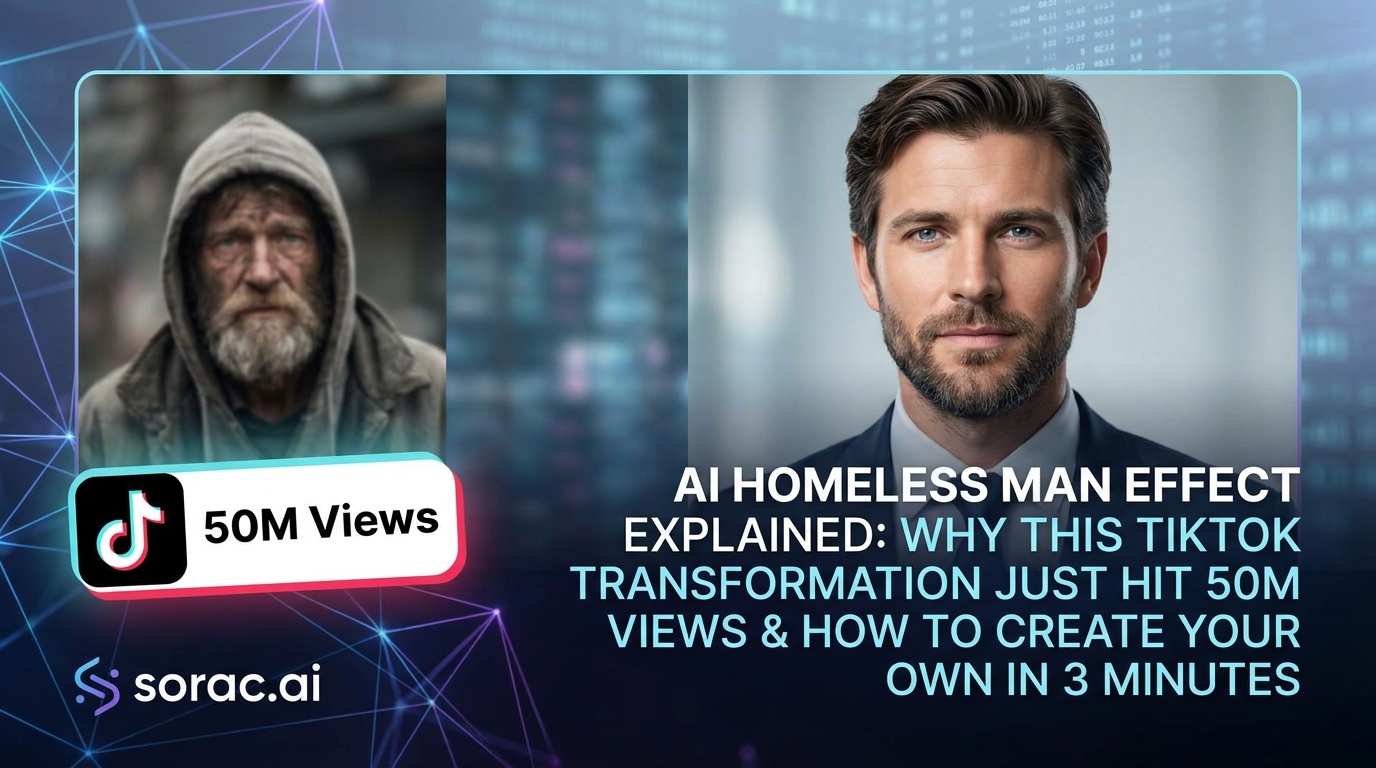
AI Homeless Man Effect Explained: Why This TikTok Transformation Just Hit 50M Views & How to Create Your Own in 3 Minutes
If you've been scrolling TikTok or Instagram Reels lately, you've probably seen it: your favorite influencer, your cousin, maybe even your boss suddenly transformed into a grizzled homeless man complete with matted beard, weathered skin, and that thousand-yard stare that says "I've seen things." The AI Homeless Man effect has absolutely exploded, racking up over 50 million views in the past few weeks alone, and honestly? It's both hilarious and slightly unsettling.
But here's the thing everyone's asking: How are people making these? Why did this particular effect go nuclear? And most importantly, how can you jump on this trend before it peaks? Let's break it down.
What Exactly Is the AI Homeless Man Effect?
The AI Homeless Man transformation is exactly what it sounds like—an AI-powered filter that takes your normal, well-groomed face and transforms it into a convincing homeless man aesthetic. We're talking:
What makes this different from your standard Snapchat filter is the quality. These aren't cartoonish overlays—they're genuinely convincing AI transformations that use advanced image generation models to completely reimagine your photo. The result? Content that's shocking enough to make people stop scrolling, but funny enough to share.
The trend started picking up steam in early May 2025, but it absolutely exploded in the past two weeks. Creators are using it for everything from "POV: You told your girlfriend you're fine" memes to "One year after graduating with a liberal arts degree" jokes. Dark humor? Absolutely. Viral? Undeniably.
Why Did This Trend Go Absolutely Nuclear?
The Shock Value Algorithm Hack
Let's be real: social media algorithms love one thing above all else—watch time. When someone sees their friend transformed into a homeless person, they don't just glance and scroll. They stop. They stare. They probably show it to the person next to them. That 3-5 second pause is algorithmic gold.
TikTok's recommendation engine particularly loves content that generates strong emotional reactions, and this effect triggers a perfect storm: surprise, humor, maybe a tiny bit of discomfort, and that irresistible "I need to try this" impulse.
The Relatability Factor
In our current economic climate—student loans, inflation, rent prices that require three roommates and a side hustle—the "one bad month away from disaster" joke hits different. It's dark comedy that resonates because it taps into real anxieties. People aren't just laughing at a silly filter; they're laughing at the absurdity of modern life.
The Technology Finally Caught Up
Here's the technical bit: Until recently, face transformation filters were pretty obvious. But with models like Nano Banana 2 Pro and the latest image-to-image AI tech, we've hit a sweet spot where transformations look realistic enough to be convincing, but can still be generated in seconds. The AI understands facial structure, lighting, texture—it's not just slapping a beard on your face, it's reimagining what you'd look like under completely different circumstances.
This level of quality used to require professional CGI artists. Now it takes three clicks.
How to Create Your Own AI Homeless Man Transformation (Step-by-Step)
Alright, enough analysis. You want to make one. Here's how:
Method 1: Using Soracai's Trending Effects (Fastest)
The absolute easiest way is to use a platform that already has the effect built in:
This method costs just a few coins (Soracai uses a pay-per-use system, no subscription needed) and gives you consistent, high-quality results. The effect is specifically tuned for the viral homeless man aesthetic, so you don't need to mess with prompts or settings.
Method 2: DIY with AI Image Generation
If you want more control or want to create variations, you can use a text-to-image or image-to-image generator:
Pro tip: The more detailed your prompt, the better. Add specific elements like "cardboard sign," "shopping cart," or "park bench" to really sell the transformation.
Method 3: Take It Further with Video
Want to really blow people's minds? Turn your homeless man transformation into a video:
The AI Dance feature uses Kling 2.6 motion control, which is surprisingly good at making static images move naturally. Watching a homeless version of yourself do the Macarena is... an experience.
Creative Variations That Are Crushing It Right Now
The Before/After Swipe
Post a carousel: first image is you looking polished and professional, second image is the homeless transformation. Caption ideas:
The Couple's Transformation
Transform both you and your partner. The "us after one trip to Whole Foods" format is killing it right now.
The Pet Version
Yes, people are doing this with their dogs and cats. A golden retriever transformed into a mangy street dog? 5 million views, easy.
The Progression Series
Show a timeline: Year 1 of college → Year 2 → Year 3 → Graduation (homeless man). The slow descent into chaos resonates with... everyone who went to college.
The Audio Mashup
Pair your transformation with trending sounds. The "I'm tired, boss" audio from The Green Mile is particularly effective. So is that "How did we get here?" sound.
The Ethics Question Everyone's Ignoring
Look, I'm going to address the elephant in the room: Is it okay to make homeless people the butt of a joke?
There's a legitimate conversation here. Some people argue that the trend punches down at a vulnerable population. Others say it's clearly satirizing economic anxiety, not actual homeless people. My take? Intent matters, and so does execution.
If your caption is making fun of homeless people themselves, that's pretty gross. If you're using the transformation to comment on economic precarity, student debt, or the absurdity of modern life—that's satire. Know the difference.
Several creators have actually used the trend to raise awareness and donations for homeless charities, which is probably the best possible outcome. If you're going to participate, consider adding a donation link in your bio.
Why This Trend Isn't Going Anywhere (Yet)
Unlike some viral effects that flame out in a week, the AI Homeless Man transformation has legs because:
With tools like Grok Imagine Video 1.5 Preview (which just dropped at the start of June with native audio and 15-second clips) and Seedance 2.0 Fast now available through Runway's API, we're going to see even more sophisticated versions of this trend. Imagine a homeless man transformation that talks, with AI-generated voice and lip-sync. That's literally possible right now.
How to Make Yours Stand Out
Since everyone and their mother is posting these now, here's how to make yours actually go viral:
Nail the Caption
Your caption is 50% of the virality equation. Generic captions = generic performance. Specific, relatable, or unexpectedly dark captions = shares.
Weak: "Homeless man filter lol"
Strong: "POV: You told your therapist you're doing fine"
Time It Right
Post between 6-9 PM in your timezone when engagement peaks. Tuesday through Thursday typically perform best for trend-jacking content.
Use the Right Hashtags
Don't go overboard, but do include:
Engage Immediately
The first 30 minutes after posting are critical. Respond to comments, engage with other posts, keep the algorithm thinking your content is hot.
What's Next: The Evolution of AI Transformation Trends
The homeless man effect is just the latest in a series of viral AI transformations. We've seen:
Each one follows a similar pattern: shocking visual + relatable context + easy replication = viral explosion.
The real game-changer coming is synchronized audio. With xAI's Grok Imagine Video 1.5 now generating video with native audio, music, sound effects, and lip-synced dialogue in a single pass, we're about to see transformation trends that don't just look different—they sound different too. Imagine your homeless man transformation giving you life advice in a gravelly voice. That's the next frontier.
The Bottom Line: Should You Jump on This Trend?
If you're trying to grow your following, boost engagement, or just want to participate in internet culture? Absolutely yes. The trend is still hot, the barrier to entry is low, and the potential for virality is real.
Just remember:
Head over to soracai.com/trends to try the effect yourself, or explore the full suite of AI tools at soracai.com/create if you want to experiment with your own variations. With Nano Banana 2 Pro, you can generate professional-quality transformations for just a few coins—no subscription, no commitment.
The homeless man effect might be dark humor, but in a world where we're all one economic disaster away from disaster, sometimes you've got to laugh. Might as well go viral while you're at it.
Now go make your transformation before this trend peaks. Your algorithm will thank you.
Related Articles

The 7 AI Photography Predictions for 2027 That Will Make Your 2026 Strategy Obsolete: Why 'Text Prompts' Are Dying, Multi-Modal Input Is Taking Over, and the 3 Platforms Already Building the Future
10 min read
The AI Realism Revolution of July 2026: Why 4 Major Platforms Just Killed 'Dreamy Filter Aesthetics' and What It Means for Your Creative Strategy (Plus the 3 New Visual Standards Dominating TikTok)
8 min read
The Great AI Photo Backlash of 2026: Why Instagram Just Banned 12 Viral Filters (But Not Nano Banana 2 Pro) and What It Means for Your Content Strategy
10 min read