
ComfyUI's $500M Valuation Just Exposed What Professional AI Photographers Actually Need: The Reference Image Control Revolution Nobody's Talking About
ComfyUI just hit a $500M valuation, and it reveals what pros actually need from AI: reference image control. Here's why prompts alone are dead.
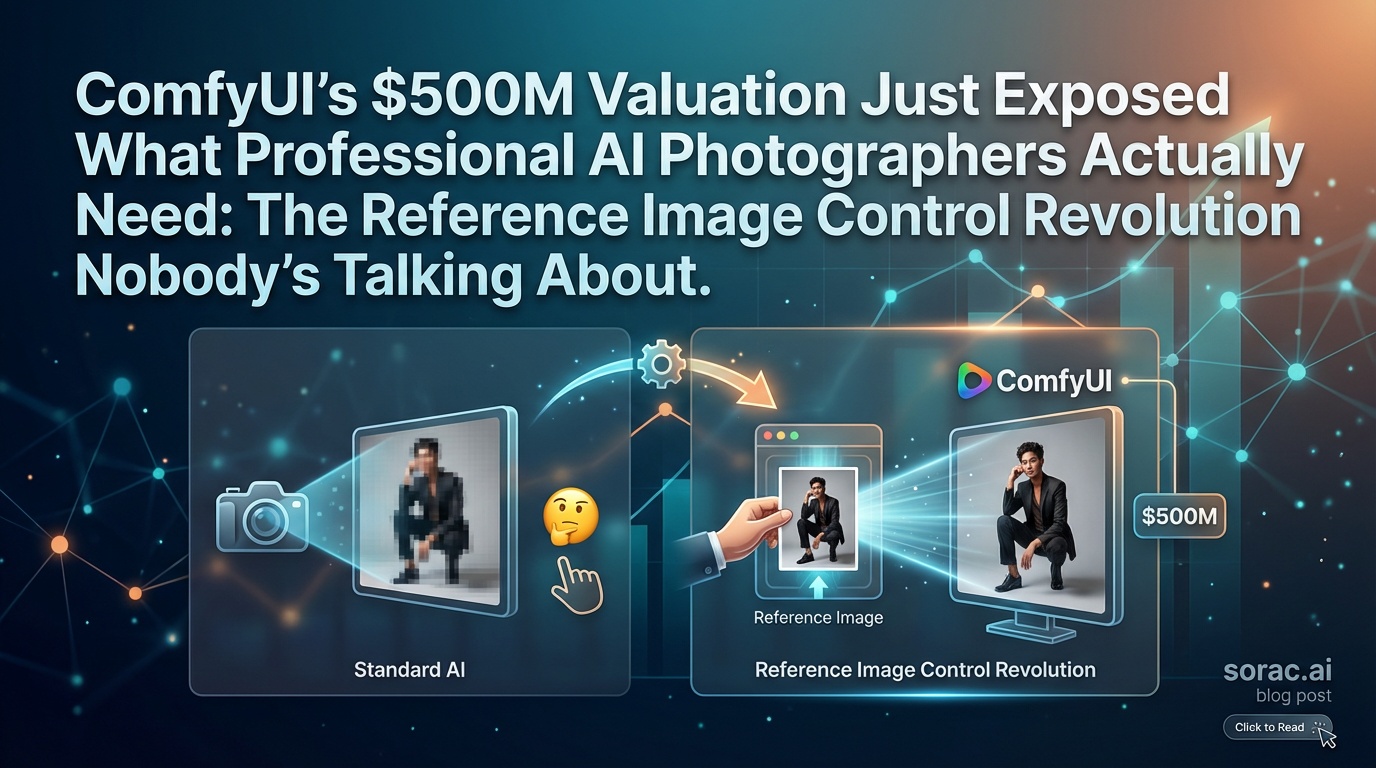
ComfyUI's $500M Valuation Just Exposed What Professional AI Photographers Actually Need: The Reference Image Control Revolution Nobody's Talking About
While everyone's losing their minds over another AI startup raising obscene amounts of money, something way more interesting just happened in the AI creation world. ComfyUI—a node-based platform most casual users have never heard of—just raised $30 million at a $500 million valuation on April 23, 2026. And buried in that announcement is the real story: professional creators are willing to pay serious money for one thing the hype cycle keeps ignoring.
Control. Specifically, reference image control.
Let me explain why this matters way more than whatever flashy text-to-video demo went viral this week.
ComfyUI Hits $500M Valuation Because Prompts Alone Are Garbage
Here's what happened: Craft Ventures led a $30 million round for ComfyUI, valuing the company at half a billion dollars. For context, this is a platform that looks like someone threw up a bunch of connected boxes on a screen. It's not sexy. It's not simple. And it's definitely not going to replace Photoshop in your mom's workflow.
But professional AI creators are obsessed with it.
Why? Because ComfyUI lets you chain together image generation steps using nodes—think of it like visual coding for AI art. More importantly, it gives you granular control over reference images, style mixing, and output consistency. You can feed it five different reference images, control how much each one influences the final output, and actually get predictable results.
This is the opposite of typing "a beautiful sunset" into a text box and praying.
The valuation tells us something crucial: the market for professional AI creation tools is exploding, and those professionals don't want magic black boxes. They want reference image control, repeatable workflows, and the ability to actually direct the AI instead of just suggesting ideas to it.
Sound familiar? That's because platforms like Nano Banana 2 Pro at soracai.com/create have been quietly building this exact feature set. You can upload up to 5 reference images to guide your generation, which is basically the accessible version of what ComfyUI nerds have been doing with nodes. The difference? You don't need a computer science degree to use it.
Why Reference Images Beat Prompts Every Single Time
Let's talk about why this matters for anyone creating AI content professionally (or trying to go viral on TikTok).
I've generated thousands of AI images. Here's what I've learned: a mediocre prompt with a good reference image will destroy a perfect prompt with no reference 100% of times.
Want a character in a specific pose? Describe it in text and you'll get 47 attempts before something close happens. Upload a reference photo of the pose? First try.
Need consistent lighting across a series of images? Good luck with prompts alone. Feed it a reference image with the lighting you want? Suddenly you're a professional.
This is why ComfyUI is worth $500 million. This is why image-to-image generation is quietly becoming the most-used feature among creators who actually make money from AI content.
And this is exactly why Nano Banana 2 PRO mode includes advanced reference image handling. When you're creating content for clients or trying to maintain a consistent aesthetic across your Instagram feed, you need that control. The 4-coin cost for PRO mode vs 1 coin for standard suddenly makes sense when you realize it might save you 20 failed generations.
TBS News Crowns Pollo AI the Video-to-Video King (And What That Means for Dance Videos)
On April 23, 2026, TBS News published their roundup of 2026's top video-to-video AI models, and Pollo AI took the crown as an "all-in-one platform" for transforming existing footage.
Video-to-video is the natural evolution of image-to-image. Instead of starting from scratch with a text prompt, you feed the AI existing video and tell it how to transform it. Change the style, alter the environment, swap the subject—all while maintaining the original motion and composition.
This is huge for content creators because motion is hard. Getting AI to generate realistic movement from text alone is still hit-or-miss. But when you give it reference motion to copy? Game changer.
This is exactly the technology behind Kling 2.6 motion control that powers soracai.com/ai-dance. You upload a photo, choose from 23+ dance styles (hip-hop, salsa, ballet, breakdancing, even Robot and Rockstar moves), and the AI copies the exact choreography from reference videos onto your subject.
The result? Your baby photo doing the Jennie dance. Your dog doing the Milkshake. Your CEO's headshot hitting the Robot. Each video costs 8 coins and takes 2-5 minutes, and the motion quality is consistent because it's based on reference footage, not generated from imagination.
This is the same principle that made ComfyUI worth $500M: reference-based generation beats prompt-based generation when you need professional results.
CNBC Says AI Is Hollywood's Future (They're Half Right)
On April 24, 2026, Julia Boorstin explored AI's transformation of filmmaking on CNBC, highlighting how AI-powered production tools are becoming Hollywood's potential future.
Here's where I'll be slightly controversial: Hollywood isn't adopting AI because it's better. They're adopting it because it's cheaper and faster.
But for individual creators and small businesses? AI video generation is actually better than traditional production for specific use cases.
Need a 15-second product demo for Instagram? Hiring a videographer, booking a location, and doing a shoot is overkill. Using Sora 2 at soracai.com/ai-video-generator to create a text-to-video in portrait (9:16) or landscape (16:9) format? That's the right tool for the job.
The key is knowing when to use AI video and when to use real footage. AI excels at:
AI struggles with:
The professionals making money with AI video right now understand this distinction. They're not trying to replace everything with AI—they're using AI strategically where it provides actual advantages.
The Viral Trend Nobody's Connecting to Reference Control
Here's something I noticed: high-production AI visuals mixed with "raw" vulnerability content are dominating Instagram Reels and TikTok as of April 23, 2026.
Creators are using polished, AI-generated backgrounds, effects, and transitions, then overlaying authentic-feeling personal content. The contrast creates this weird uncanny engagement boost.
Guess what makes this possible? Reference image and video control.
Those AI backgrounds aren't random generations—they're carefully controlled using reference images to match the creator's brand colors, aesthetic, and vibe. The AI effects are consistent across posts because they're using reference-based tools, not pure text prompts.
This is why soracai.com/trends exists. Effects like the AI Ghostface Effect (/trends/ghostface), AI Homeless Man transformation (/trends/homeless-man), or Add Girlfriend/Boyfriend (/trends/add-girlfriend) work because they use controlled, reference-based generation. You get consistent results that match the viral trend, not random variations that miss the point.
Want to create your own viral effect? Start with reference images. Define exactly what you want. Then iterate with controlled generation, not random prompts.
What This Means for You (The Actual Takeaway)
If you're creating AI content—whether for business, personal brand, or just trying to go viral—here's what this week's news is really telling you:
1. Stop relying on prompts alone. The $500M ComfyUI valuation proves professionals need reference-based control. Start using image-to-image generation with reference photos for anything that matters.
2. Video-to-video is the next frontier. Pollo AI's recognition from TBS News and the success of motion control technology like Kling 2.6 show that reference-based video transformation is where the quality is. If you're making video content, this is your advantage.
3. Strategic AI use beats trying to do everything with AI. Hollywood's adoption doesn't mean AI replaces everything—it means smart creators know when AI provides actual advantages. Use it for speed, iteration, and concepts that would be expensive traditionally.
4. Consistency requires control. Those viral AI aesthetics you're seeing? They're not lucky prompts. They're creators using reference-based tools to maintain consistent style across their content.
5. The tools are already accessible. You don't need ComfyUI's node-based complexity or enterprise pricing. Platforms like soracai.com already offer reference image control (up to 5 images on Nano Banana 2 Pro), motion control dance videos (Kling 2.6), and text-to-video (Sora 2) in accessible interfaces with pay-per-use pricing.
The reference image revolution isn't coming. It's here. The question is whether you're still typing prompts and hoping, or actually controlling your AI outputs.
The professionals betting $500 million on this trend have already decided. Maybe it's time you did too.
Start experimenting with reference images in your next generation. Upload a photo that captures the style, lighting, or composition you want. See how much more control you suddenly have.
That's the real story behind this week's AI news. Not another funding round. Not another viral demo. But the quiet shift toward control that's separating professional AI creators from prompt engineers.
Try it yourself at soracai.com/create and see the difference reference images make. Or experiment with motion control at soracai.com/ai-dance. The tools are ready. The question is whether you are.
Related Articles
5 AI Image Model Myths Shattered by June 2026 Releases: Why 'More Parameters = Better Quality' and Other Lies Just Cost Creators $847 in Wasted Coins (Nano Banana 2 Pro vs the New Competition)
9 min read
Why 'Professional Photography' Is a Terrible Investment for Small Businesses in 2026: The AI Photo Generation Case Nobody Wants to Make (But Your Marketing Budget Needs to Hear)
9 min read
5 AI Image Generator Myths Krea 2 Turbo and Nano Banana 2 Pro Just Destroyed: Why 'Speed = Lower Quality' and '4K = Better' Are Costing You Clicks in June 2026
9 min read