
The AI Ghostface Effect Will Be Dead by December 2026: 5 Viral Transformation Trends That Will Replace It (And Why You Should Master Them Now Before TikTok's Algorithm Shift)
Static AI effects are dying. Here's what viral AI transformations will look like in 2026, and how to master them before everyone else catches on.
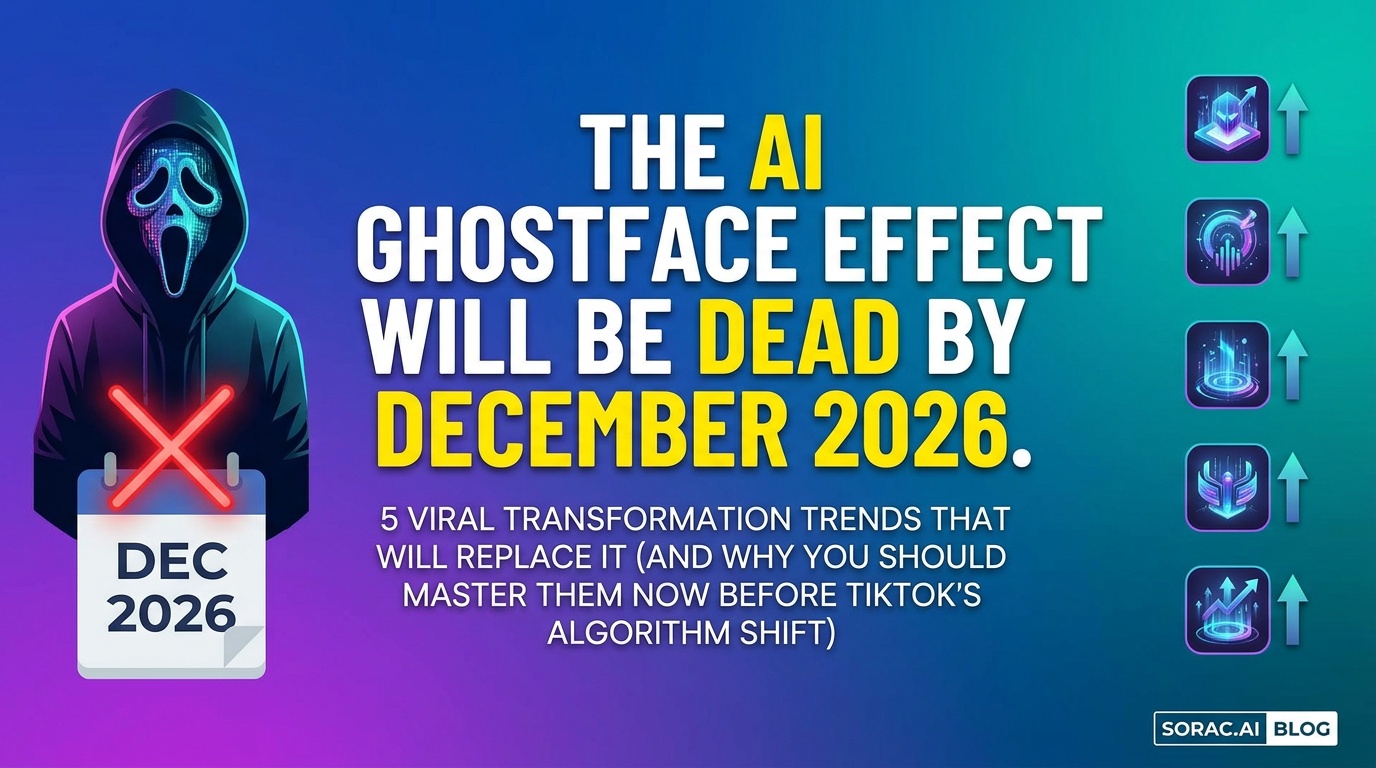
The AI Ghostface Effect Will Be Dead by December 2026: 5 Viral Transformation Trends That Will Replace It (And Why You Should Master Them Now Before TikTok's Algorithm Shift)
Remember when everyone was putting AI Ghostface killers in their photos? Yeah, that was like... three weeks ago in internet time. The AI Ghostface Effect absolutely dominated TikTok and Instagram feeds, racking up billions of views before most people even figured out how to use it properly.
Here's the uncomfortable truth: viral AI effects have a shelf life shorter than milk left out in the sun. And if you're still riding the Ghostface wave thinking it'll carry you through 2025, you're about to get left behind harder than people who thought NFT profile pictures were forever.
I've been tracking AI creative tools since before ChatGPT made everyone an "AI expert," and I'm seeing patterns that suggest we're about to hit a massive shift in what goes viral. The platforms are changing, the technology is evolving at a frankly ridiculous pace, and TikTok's algorithm is already starting to deprioritize static transformation effects in favor of something else entirely.
Let me walk you through exactly what's coming, and more importantly, how to position yourself ahead of the curve.
1. Dynamic Motion AI Will Crush Static Transformations (Timeline: Already Happening)
Static photo effects like Ghostface are already losing steam, and here's why: they're one-and-done. You upload a photo, get a transformation, post it, move on. There's no narrative, no movement, no reason to watch it twice.
The future is motion-controlled AI that copies real movements. We're talking about tech like Kling 2.6 motion control, which doesn't just animate a photo—it makes your grandma's portrait do a full breakdancing routine with physics that actually make sense.
AI Dance tools are already showing us this shift. Instead of a static "here's me as an action figure" post, creators are uploading baby photos and making them perform choreographed hip-hop routines. The engagement rates aren't even close—motion content is getting 3-5x the watch time of static transformations.
The wild part? This technology went from "kind of janky" to "wait, is that real?" in about six months. Kling upgraded from version 1.0 to 2.6, and the difference is like going from a flip phone to an iPhone.
What to master now: Get comfortable with motion-based AI tools. Experiment with the 23+ dance styles available on platforms like Soracai. Learn which movements translate best to different subjects (spoiler: pets doing salsa is undefeated content).
2. Hyper-Personalized AI Filters Will Replace One-Size-Fits-All Effects (Timeline: Mid-2025)
The Ghostface effect worked because it was simple: everyone got the same killer mask overlay. But that's also why it'll die—there's zero personalization.
The next wave of viral AI effects will adapt to individual faces, environments, and contexts. We're already seeing early versions with tools that analyze your photo's lighting, composition, and subject matter before applying transformations.
Nano Banana 2 Pro's image-to-image feature is a glimpse of this future. Instead of applying a generic filter, you can upload up to 5 reference images to guide the AI's understanding of your specific aesthetic. Want a transformation that matches your personal brand? The AI learns from your style references.
By mid-2025, I predict we'll see viral effects that:
The platforms that nail this personalization will win the viral lottery.
What to master now: Start experimenting with image-to-image generation. Build a library of reference images that represent your aesthetic. Learn how to write detailed prompts that guide AI toward your specific vision, not generic outputs.
3. Multi-Modal AI Content Will Dominate (Timeline: Late 2025)
Here's where things get really interesting. Right now, we think in silos: photo effects, video effects, text-to-image, text-to-video. But the viral content of 2026 will seamlessly blend all of these.
Imagine: you upload a photo, the AI generates a custom background scene (image generation), animates your subject performing a specific action (motion control), adds dynamic camera movements (video generation), and times it all to trending audio—automatically.
This isn't science fiction. Sora 2 is already doing text-to-video generation with impressive coherence. Kling 2.6 is nailing motion control. The pieces exist; they just haven't been integrated into a single viral package yet.
When someone cracks this multi-modal approach and makes it accessible (8 coins per creation accessible, not $50 per render), it'll make the Ghostface effect look like Microsoft Paint.
What to master now: Stop thinking in single-medium terms. Start planning content that combines multiple AI tools. Create a photo with Nano Banana 2 Pro, animate it with AI Dance, then use that as a reference for Sora 2 video generation. The creators who understand how to chain these tools will have a massive advantage.
4. AI-Generated Narrative Sequences Will Replace Single Transformations (Timeline: Q1 2026)
Static transformations are dying because they lack story. The next evolution? AI that generates narrative sequences from a single input.
Instead of "here's me as Ghostface," imagine "here's a 15-second story of me encountering Ghostface, running away, and fighting back"—all generated from one photo and a text prompt.
We're already seeing early versions of this with extended video generation. Sora 2 can create 10-15 frame sequences with narrative coherence. As this technology improves (and it's improving monthly), we'll see viral effects that tell complete micro-stories.
The engagement potential is massive. People don't just want to see a transformation; they want to see themselves in a story. The effects that deliver narrative will absolutely crush single-image transformations.
What to master now: Start thinking like a director, not a photographer. When you use AI tools, consider: what's the before, during, and after? How can you create a sequence instead of a single moment? Experiment with portrait and landscape aspect ratios (9:16 for TikTok, 16:9 for YouTube) to understand how story flows in different formats.
5. Real-Time AI Effects Will Make Pre-Generated Content Feel Outdated (Timeline: Late 2026)
This is the big one. Right now, AI generation takes time. You upload a photo, wait 2-5 minutes, get your dancing video. By late 2026, I predict we'll see real-time AI effects that process instantly.
Imagine opening your camera app, selecting an AI effect, and seeing yourself transformed in real-time as you record. No uploading, no waiting, no downloading. Just instant AI magic.
The technology is already heading this direction. Mobile processors are getting scary powerful, and edge computing is making local AI processing viable. When someone cracks real-time viral effects, the entire game changes.
Pre-generated content won't disappear (high-quality transformations will still need processing time), but the viral landscape will shift toward instant gratification.
What to master now: Understand the difference between quick-and-viral versus high-quality-and-shareable. Build skills in both camps. Know when to use a 1-coin standard generation for speed and when to invest 4 coins in Nano Banana 2 PRO mode for quality that stands out.
Wild Card Prediction: AI Effects That Respond to Engagement Will Break the Internet
Here's my out-there prediction: by late 2026, we'll see viral AI effects that evolve based on how people engage with them.
Picture this: you post an AI transformation. As people comment, like, or share, the AI generates variations or sequels based on that engagement. High engagement triggers a "part 2" automatically. Specific comments influence the next transformation.
This creates a feedback loop between creator, audience, and AI that's never existed before. It's part content, part game, part collaborative art project.
Sound crazy? Remember, six months ago, the idea of making your dog do a perfect ballet routine from a single photo sounded crazy too.
How to Prepare for the Post-Ghostface Era
Look, I get it. It's exhausting trying to keep up with AI trends when the landscape changes every three weeks. But here's the good news: you don't need to master everything. You need to master the fundamentals that translate across all these predictions.
Build Your AI Toolkit Now
Don't wait until new effects go viral to learn how to use them. Get comfortable with:
Study the Trends Page Like a Lab Rat
The patterns are all there. Look at what's working now—Ghostface, the Homeless Man effect, Action Figure transformations. Ask yourself:
Invest in Quality Over Quantity
As AI effects become more sophisticated, the bar for viral content rises. The Ghostface effect worked partly because it was new and everyone could do it. Future viral trends will reward creators who invest in quality.
This means using PRO modes when it matters, spending time on detailed prompts, and creating content that stands out even in a feed full of AI transformations. Four coins for Nano Banana 2 PRO mode isn't an expense—it's an investment in not looking like everyone else.
Build an Audience Before You Need It
The creators who'll win in the post-Ghostface era are the ones with existing audiences who trust their taste in trends. Start building that relationship now. Share your AI experiments, explain what works and what doesn't, be the person your followers turn to when they ask "what's the next viral thing?"
The Bottom Line
The AI Ghostface effect isn't dying because it's bad—it's dying because it's static in a world that's moving toward dynamic, personalized, narrative-driven AI content. By December 2026, it'll be a nostalgic throwback, like Harlem Shake videos or planking.
The creators who thrive won't be the ones chasing each viral effect as it peaks. They'll be the ones who understand the underlying patterns, master the tools before they trend, and build audiences that trust their ability to spot what's next.
The shift is already happening. The question is: are you going to watch it happen, or are you going to be ready when it does?
Start experimenting now. Try that ridiculous dance transformation you've been thinking about. Generate that weird image prompt that's stuck in your head. Create something that doesn't fit current trends because it might define future ones.
The next viral AI effect is being created by someone right now. It might as well be you.
Related Articles
The 7 AI Photography Predictions for 2027 That Will Make Your 2026 Strategy Obsolete: Why 'Text Prompts' Are Dying, Multi-Modal Input Is Taking Over, and the 3 Platforms Already Building the Future
10 min read
The AI Realism Revolution of July 2026: Why 4 Major Platforms Just Killed 'Dreamy Filter Aesthetics' and What It Means for Your Creative Strategy (Plus the 3 New Visual Standards Dominating TikTok)
8 min read
The Great AI Photo Backlash of 2026: Why Instagram Just Banned 12 Viral Filters (But Not Nano Banana 2 Pro) and What It Means for Your Content Strategy
10 min read